How to Build an MVP for a Startup (Step-by-Step Guide)
Building a startup is not about getting everything right from day one. In reality, most successful products evolve through iterations, mistakes, and constant adjustments.
The real risk is different - spending months building something that users don’t actually need.
This is where an MVP (Minimum Viable Product) becomes critical. It allows you to validate your idea early, reduce risk, and move forward based on real user feedback instead of assumptions.
In this guide, you’ll learn how to build an MVP step by step, what mistakes to avoid, and how to approach product development in a way that leads to real results.
What is an MVP?
A Minimum Viable Product is the simplest version of a product that still delivers value to users and allows you to test your core idea.
It is not just a “smaller version” of your product. It is a strategy focused on learning as quickly as possible.
Instead of trying to build a complete solution, you focus on solving one specific problem and observing how users respond. That feedback becomes the foundation for everything you build next.
Why Startups Fail Without an MVP
Many startups fail not because of poor execution, but because they build based on assumptions instead of real demand.
Without an MVP, teams often spend months developing features that feel important internally but do not resonate with users. By the time the product is launched, a significant part of the budget is already gone, and there is little flexibility left to pivot.
Another common issue is timing. Without early validation, startups frequently enter the market too late or miss the actual problem users care about.
An MVP changes this dynamic. It shifts the focus from building to learning and introduces real-world feedback early in the process.
If you want to validate your idea before investing heavily, we can help you define and launch your MVP faster.
Contact us!MVP Business Benefits
Below are the benefits of an MVP for your startup. While some of them can be pretty valuable right now, creating an MVP can also deliver benefits in the long run, so let’s review them in more detail.
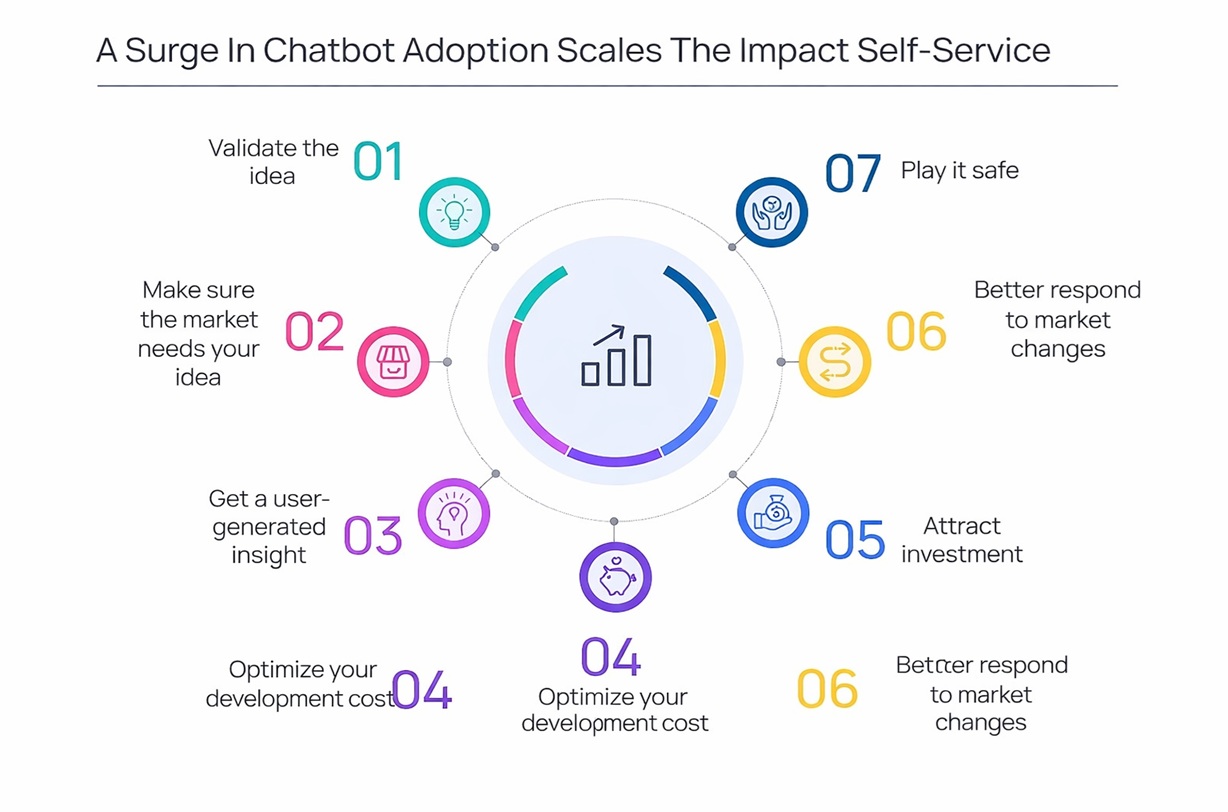
Validate the idea. Once upon a time, each great startup began as an idea. Still, the idea alone isn’t enough to make sure that it will work as you expect it to work, being demanded by the market and adopted by the users. Creating an MVP is the first step towards making sure you are on the right track since it allows for validating the idea without the need to create a full-fledged product and invest in it. What’s more, there are some completely free idea validation practices – and we will share them a little later.
Make sure the market needs your idea. Most of the startups fail because the market doesn’t need them. Developing a startup MVP is the opportunity to find out, check and test the real market response, at significantly lower costs than launching a fully ready solution. What’s more, MVP development goes hand in hand with research and discovery which allows for suggesting even more winning ideas right on the go.
Get a user-generated insight. One of the core ideas behind MVP development for tech startups is the necessity to constantly test your product and carefully listen to the opinion of your users. This is just the case when the user decides what you should develop to meet their needs, and MVP gives you an opportunity to uncover the true desires of your target audience firsthand.
Optimize your development cost. Building MVP for startups protects you from both investing in the solution the market will abandon and in building the features you users don’t actually need. To put it simply, startup MVP development is a path of cost optimization since this tactic encourages you to learn, test, and only then, invest.
Attract investment. The innovative projects willing to attract investments are also welcome to create a minimum viable product. Showcasing it to the investors significantly increases the chances of getting funded since your MVP is living proof that: a) your idea works; b) your solution solves the problem; c) the users are likely to adopt it. Compared with a bare idea, an MVP is a more winning option to attract investments since you already have a lot to show, in addition to the sales pitch and business plan.
Better respond to market changes. Most modern applications are being developed in an uncertain market environment. Even the ultimately deep market research isn’t a guarantee that there will be no sudden changes tomorrow. Following the path of an MVP, development allows you to be more flexible with your product, adjust it on the go, and better meet the changing users’ preferences.
Play it safe. Generally, creating an MVP protects your business from making hasty decisions and wasting the development budget. It is also promises an opportunity to better research the market and target users, tailoring your future solution to their expectations as carefully as possible. MVP development for startups is an ever-free and win-win strategy that is always better to follow regardless of the development methodology, market specifics, and the budget available.
MVP Development for Startups: What You Need to Know
MVP development is not just about saving time or money. It is about making better decisions.
At this stage, every decision should answer one question: does this help us learn faster?
A well-built MVP gives you clarity on what works, what doesn’t, and what users actually expect. It reduces uncertainty and helps you avoid costly mistakes later.
This is why experienced teams treat MVP development as a structured process, not just a quick build.
Types of MVP You Can Build
Not every MVP requires full development. The format depends on what you are trying to validate.
In some cases, a simple landing page combined with targeted traffic is enough to test demand. This approach helps you understand whether users are even interested in your idea.
In other situations, a prototype is more appropriate. It allows users to interact with your product’s logic and helps you validate user experience before investing in development.
A functional MVP goes further. It is a working product with a limited set of features, designed to test real usage, retention, and sometimes even monetization.
As your product evolves, it can grow into a more mature version ready for scaling, but the key insight is always the same - you build step by step, based on feedback.
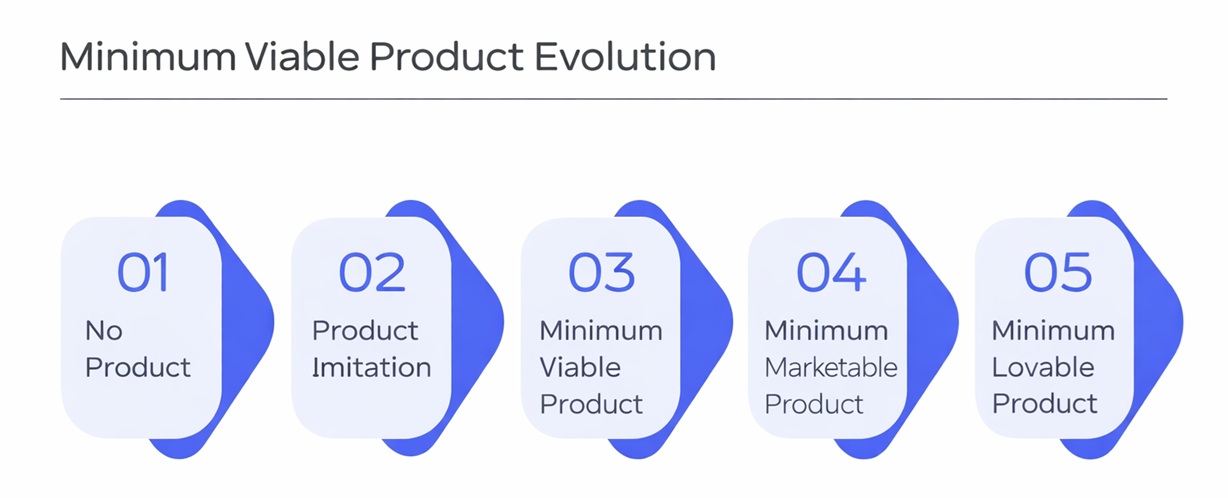
The concept of an MVP is pretty flexible - it allows you to get started with your idea validation at no or almost no cost, and grow step by step, testing new (but still market-suggested) hypotheses and evaluating their business value.
Below are the main types of a Minimum Viable Product you can create for your business.
No Product. Sometimes, you don’t need a product itself to test its market need, and this is relevant for both digital and physical products. For example, you can evaluate the market response for your future project by creating a simple landing page and running PPC ads. This simple and low-cost tactic allows you to make sure there is an actual interest in your offer, plus you can test a landing page as a marketing tool.
Product Imitation. This type of MVP is more difficult to create since this is a kind of prototype of a future solution. The imitated applications, as a rule, allow the focus group users to interact with them but use raw and random data called via APIs.
Minimum Viable Product. This is already a demo version of your future solution. Usually, it comes with a core feature to demonstrate how the product solves the users’ needs.
Minimum Marketable Product. An MMP is the next stage in the MVP evolution – this type of app is quite ready to be advertised and sold to the target audience since the value it delivers is already confirmed at the stage of MVP testing.
Minimum Lovable Product. MLP is the solution that users love and recommend. This is almost the final stage of startup development since all the features that will be added in the future are the response to either growing or changing users’ demands.
Step-by-Step: How to Build an MVP
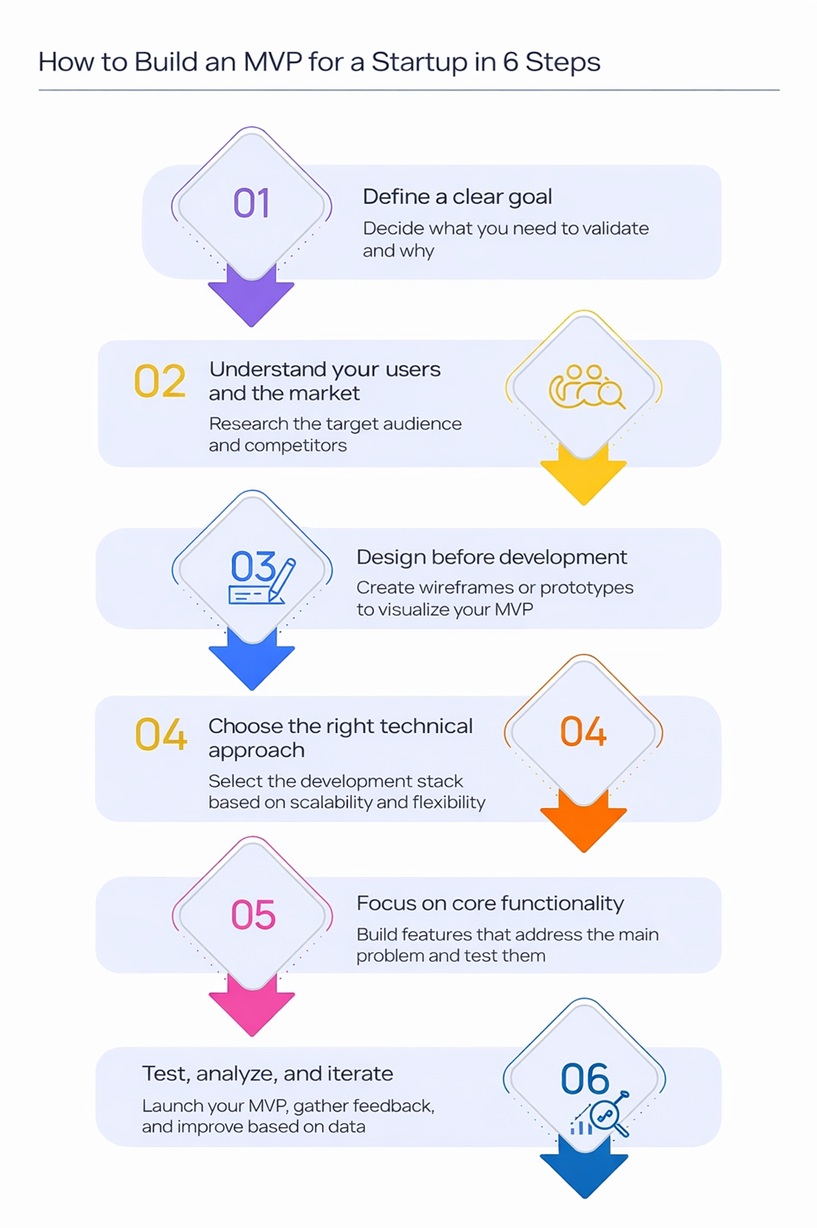
Step 1. Define a clear goal
Before you start building anything, you need to clearly define what you are trying to validate.
Trying to test multiple ideas at once leads to confusion and weak results. A strong MVP focuses on one key hypothesis and is designed specifically to test it.
For example, you might want to validate demand, usability, or willingness to pay. Each of these requires a different approach.
Step 2. Understand your users and the market
A successful MVP is built on a deep understanding of the problem.
You need to know who your users are, what challenges they face, and how they currently solve them. This often requires direct conversations, interviews, and analysis of existing solutions.
Skipping this step usually results in a product that works technically but fails to deliver real value.
Step 3. Design before development
One of the most common mistakes is jumping straight into development.
Starting with design allows you to test ideas quickly, validate user flows, and identify potential issues early. It also helps align the team and avoid unnecessary rework later.
Even simple prototypes can reveal critical problems that would otherwise only appear after development.
Step 4. Choose the right technical approach
At the MVP stage, the goal is not perfection - it is speed and flexibility.
Overengineering at this stage often leads to delays and unnecessary costs. Instead, the focus should be on building something stable enough to test and flexible enough to evolve.
The right technical decisions depend on your product, but they should always support fast iteration.
Step 5. Focus on core functionality
This is where many teams struggle.
There is always a temptation to add more features to make the product feel complete. In practice, this usually slows everything down and weakens the core value.
A strong MVP solves one problem well. Everything else comes later.
Step 6. Test, analyze, and iterate
Once your MVP is live, the real work begins.
You start collecting data, observing user behavior, and understanding how the product performs in real conditions.
This feedback should guide every next step. Features are added, adjusted, or removed based on evidence, not assumptions.
Not sure how to approach your MVP? Our team helps founders go from idea to working product with a clear, structured process.
Get help from BineralsHow Much Does It Cost to Build an MVP?
The cost of building an MVP varies depending on complexity, approach, and goals.
Some ideas can be validated with minimal investment using simple tools. Others require a dedicated team and a more structured development process.
What matters most is not the exact budget, but how effectively it is used to reduce uncertainty and generate insight.
In practice, investing in a well-planned MVP almost always saves money compared to building a full product without validation.
It is safe to assume that MVP development cost varies widely, typically ranging from a few hundred dollars for basic validation to $10,000-$50,000+ for a functional product with custom features.
Common Mistakes When Building an MVP
Most MVP failures are not caused by technology, but by strategy.
Teams often try to build too much too early, which increases complexity without improving validation. Others skip user research and end up creating solutions that do not match real needs.
Another frequent issue is focusing too much on technology and not enough on user experience. This leads to products that technically work but fail to engage users.
Avoiding these mistakes requires experience, structure, and a clear understanding of the MVP process.
When You Actually Need a Development Team
At some point, simple validation methods are no longer enough.
Once your idea is validated and you start seeing real user engagement, the focus shifts toward building a scalable and reliable product. This is where a professional development team becomes essential.
The difference at this stage is significant. Instead of just building features, you start building a product that can grow, scale, and support real users.
Working with an experienced team also helps avoid architectural mistakes that can be expensive to fix later.
If you’re ready to move from idea to development, we can help you design, build, and scale your product.
Contact Binerals!FAQ
Final Thoughts
Building an MVP is not just a step in development - it is the foundation of a successful product.
It allows you to move forward with confidence, make informed decisions, and adapt to real market conditions. Instead of relying on assumptions, you build based on evidence.
For most founders, the challenge is not understanding the concept of an MVP. It is executing it correctly.
And that is often where having the right team makes all the difference.